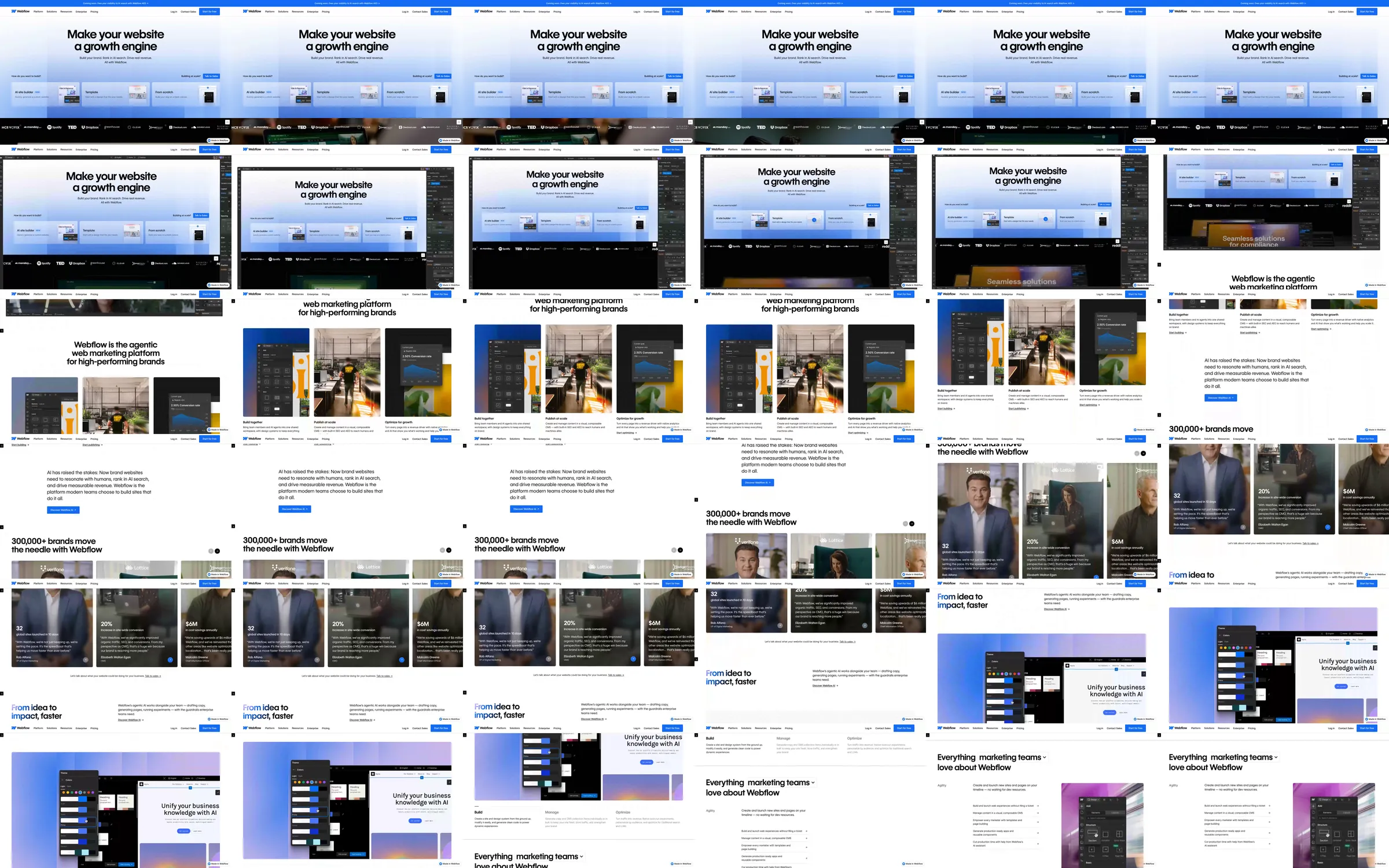
Webflow presents its website-experience platform through a choice-led hero, visual building canvas, publishing and optimization capabilities, customer outcomes, AI-assisted workflows, recent updates, and community-made work.
1. Product-choice hero and primary conversion actions. 2. Layered builder canvas showing design and code workflows. 3. Build, publish, and optimize feature columns. 4. Brand-scale proof and customer outcome cards. 5. Agentic web-marketing and collaboration explanation. 6. AI knowledge and business workflow canvas. 7. Updates, conference material, Made in Webflow gallery, and footer.
Large direct typography and real product canvases explain a technically broad platform without hiding the interface, while blue accents keep conversion and navigation obvious across a long page. The cost to weigh is that stacked UI screenshots, customer cards, and changing campaign content create a heavy page that can age quickly and compete for attention.
- The [Refero style page](https://styles.refero.design/style/31471407-598a-45fd-a505-d921980d8855) and its MP4 supply the earlier growth-engine hero, builder-canvas choreography, feature stacking, customer-card sequence, and complete scroll narrative. - The live capture at https://webflow.com/ supplies the current Build for what’s next hero, present campaign content, navigation, responsive screenshots, and measured layout. - The hero and some downstream campaign sections differ materially; the live page is trusted for current structure and copy, while the recording is retained as the motion reference for the captured design version.